
NATA Aptitude Test
The National Aptitude Test in Architecture (NATA) is a crucial examination for aspiring architects in India. It opens the door to architecture schools at the undergraduate level. The NATA entrance exam for architecture evaluates a candidate’s aptitude in design, critical thinking, and visual-spatial understanding—skills essential for success in this creative and challenging field.
If you're dreaming of an architecture career in India, the National Aptitude Test in Architecture (NATA) is the most important hurdle you need to clear. NATA, run by the Council of Architecture (CoA), is specifically designed to see if you have the right aptitude: testing your creativity, design sense, logical thinking, and math skills. Succeed on the NATA Aptitude Test, and you'll be eligible to apply to B.Arch programs at countless top colleges across the country. Getting your preparation right is the absolutely crucial first step to winning your spot in this competitive field.
NATA Exam Pattern & Marking Scheme
The NATA examination is a 3-hour test conducted for a total of 200 marks, usually divided into two main sections:
Part A: Drawing & Composition (Offline): This is where your visual and creative talent including sketching, composition, using color, and 3D visualization is tested. It lasts 90 minutes and is worth 80 marks.
Part B: Aptitude (Online/MCQ): This section is computer-based and assesses your mathematical skills, general architectural knowledge, visual reasoning, and logic. It also lasts 90 minutes and is worth 120 marks.
Marking Scheme Highlights:
Total Marks: 200
No Negative Marking: Candidates are encouraged to answer all questions without fear of penalties.
Qualifying Marks: Typically, you need to score at least 25% in both the drawing section and the online aptitude section to qualify.
NATA Exam Schedule
- The NATA aptitude test is scheduled to take place on specific Fridays and Saturdays between March and June in 2026/2027.
- There will be one session on Fridays (afternoon) and two sessions on Saturdays, both of which will take place in the cities that have been notified at the centers that have been assigned.
- The session time on Fridays is from 1:30 to 4:30 p.m. The morning session time on Saturdays is from 10:00 AM to 1:00 PM The afternoon session time is from 1:30 to 4:30 p.m.
- Prospective students have the option of taking one, two, or up to three examinations during a single academic year. Participation in numerous examinations is considered voluntary and is left up to the discretion of the candidate.
- While registering on the NATA website, candidates can select the city or region where they would like to take the test & the date of the examination.
- Registration Deadline: Depending on the test, it usually closes on the previous Monday or Tuesday of each nata exam week.
- Admit Card Release: Published a few days before the exam.
Result Announcement: within seven days of each test date.
NATA Entrance Exam Syllabus and Topics Covered:
The NATA entrance exam will consist of two sections
Part A: Offline Drawing and Composition Test (90 Minutes, 80 Marks)
- A1: Composition and Colour (25 Marks): Making compositions and choosing colours for diverse settings.
- A2: Sketching and Composition (Black & White) (25 Marks): The task involves determining factors such as scale, proportion, texture, shading, and perspective.
- A3: 3D composition question (30 Marks): A kit is given & students are asked to make intriguing 3D composition with the given kit.
Part B: Computer-based adaptive test (90 minutes, 120 marks)
- B1: 42 Multiple Choice Questions (MCQs)
- B2: 8 No Choice Questions (NCQs)
Question in Part B includes topics & subjects from:
- Visual reasoning: Reconstructing 2D and 3D compositions.
- Logical deduction: Situation interpretation, conclusion drawing, and information decoding.
- General Knowledge in Architecture: : famous Architects, famous buildings, famous monuments, current happening in the architectural industry. Language Interpretation: English grammar, sentence structure, meaning of words & sentences
- Design sensitivity: ability to observe, record & analyze, people, spaces, products and environments along with critical thinking, reasoning, the ability to identify subtle communications.
- Design Thinking: ability to understand some problem identification, metaphors definitions or analysis of given situation.
- Quantitative Aptitude: basic mathematics & its association with creative thinking including the ability to unfold a space with the use of geometry.
A total of 200 marks is required (Part A: 80 marks, Part B: 120 marks).
NATA Exam Application Procedure: Step-by-Step Guide
1. Complete the Application Form:
- Register on the NATA website with your basic information.
- Fill out the application with personal, academic, and contact information.
- Upload papers, including a passport-sized photo and signature, in the relevant dimensions and formats.
- Verify all information before submitting the form.
- Pay the application cost online with debit/credit cards, net banking, or UPI.
2. Issuance of an Admit Card:
- Log into the NATA website, with your registration number and password to view your admit card.
- Check the NATA exam details on the admit card and download.
3. Test Centre Allocation:
- The preference of the test center can be opted for at the time of the application filling .
- The Council of Architecture assigns centers based on location and availability.
- Admission cards will confirm center placement.
4. Declaration of NATA Results:
- Test results are usually released seven days after the test.
- Log in to the official website to view your scorecard.
- Sectional scores, overall marks, and qualifying status are published.
Common Mistakes to Avoid When Applying for NATA Entrance Exam:
- Giving Wrong Information: Make sure that all of your personal and academic information is correct.
- Not Meeting Deadlines: Send in your forms and download your admit cards on time.
- Document Errors: When you upload photo or signature, make sure you follow the file format & file size mentioned in the nata broshure.
- Test Center Confusion: Check the information about your test centre again to avoid stress at the last minute.
NATA Exam Eligibility Criteria:
Academic Qualification:
- Candidates must pass or be taking 10+2 Physics, Chemistry, and Mathematics (PCM).
- Alternatively, 10+3 diploma holders with mathematics as a required subject are qualified.
Minimum Marks Required:
- Minimum 45% aggregate marks in Physics, Chemistry, and Math.
- Candidates must also get at least 50% in their qualifying exam.
Age Limit:
- The Council of Architecture (CoA) has not imposed an age limit for NATA Exam.
- However, hopefuls must meet the architectural college admission authorities' age requirements.
Reservations Under Different Categories:
Reservation regulations and relaxation in qualifying marks for reserved categories are set by the Admission/Counseling Authority, not NATA.
Number of Attempts:
Three NATA exams each year are allowed, with the best score used for admissions.
Additional Notes:
- NRI and international candidates must meet Indian eligibility requirements.
- NATA scores are valid for the current academic year.
NATA Application Fee Structure:
Fees for categories:
- General/OBC (Male): ₹1,750 for one test, ₹3,250 for two, and ₹4,500 for three.
- Female General/OBC: ₹1,250 for one test, ₹2,250 for two, and ₹3,000 for three.
- Male SC/ST/EWS/PwD: ₹1,250 for one test, ₹2,250 for two, ₹3,000 for three.
- Female SC/ST/EWS/PwD: ₹1,000 for one test, ₹1,750 for two, ₹2,500 for three.
- Transgender Candidates: ₹1,000 for one exam, ₹1,500 for two, and ₹2,000 for three.
- Candidates outside India: ₹10,000 for one test, ₹18,000 for two tests, ₹25,000 for three tests.
Qualifying NATA Score
Minimum Qualifying Marks:
For the NATA aptitude test, candidates must score 70 out of 200. This rating is the Council of Architecture (CoA) baseline score for admission consideration.
Section-Wise Cutoffs:
In Part A (Drawing), candidates must score 20 out of 80.
In Part B (MCQs), Candidates must score a minimum of 30 out of 120. Section-wise cutoffs ensure that candidates display innovative and analytical test skills.
Architecture College Admission After NATA Score:
Indian architecture schools use NATA scores to admit students to B.Arch programs. The Council of Architecture (CoA) requires NATA test scores for admission. NATA scores, academic performance, and other admission requirements are considered by colleges. Higher scores increase the likelihood of admission to top schools.
Step-by-Step Process:
- Step 1: Check your eligibility: To enroll in NATA courses, you must have completed 10+2 with Physics, Mathematics, and one of the following subjects — Chemistry, Biology, Technical Vocational Subject, Computer Science, Information Technology, Informatics Practices, Engineering Graphics, or Business Studies.
- Step 2: Minimum 50% aggregate marks in 10+2 (for reserved groups, government-approved relaxation).
- Step 3: Apply to architectural colleges/universities that accept NATA scores. State/University admission authorities or private institutes determine admission.
- Step 4: Attend B.Arch admission counseling. Some states/universities offer centralized counseling. Candidates must register, choose, and attend counseling (if needed). Seats are allocated by rank, preference, and availability.
- Step 5: Verification and fee payment is the next step. Candidates verify their documents and pay admission fees at their college.
- Step 6: Once you have received the admission confirmation, your course starts. Candidates receive an admission confirmation letter after fulfilling all formalities. Classes begin according to the university calendar.
List of NATA Exam Centers
| State | City |
|---|---|
| Andhra Pradesh | Vijayawada |
| Visakhapatnam | |
| Arunachal Pradesh | Itanagar |
| Assam | Guwahati |
| Bihar | Patna / Gaya |
| Chandigarh | Chandigarh |
| Chhattisgarh | Raipur |
| Delhi | Delhi |
| Goa | Panaji |
| Gujarat | Ahmedabad / Surat |
| Vadodara / Rajkot | |
| Haryana | Faridabad / Sonipat |
| Gurgaon/Rohtak | |
| Himachal Pradesh | Shimla/Kangra |
| Jammu and Kashmir | Jammu |
| Srinagar | |
| Jharkhand | Ranchi |
| Karnataka | Bengaluru / Manipal / Tumkur |
| Hubali/Kalburgi | |
| Mysore / Bijapur | |
| Kerala | Ernakulum/Kochi |
| Kannur / Kollam | |
| Kottayam / Thrissur | |
| Kozhikode / Malapuram | |
| Thiruvananthapuram / Palakkad | |
| Madhya Pradesh | Bhopal / Gwalior / Jabalpur |
| Indore / Sehore | |
| Sagar | |
| Maharashtra | Ahmednagar / Akola |
| Amravati / Ratnagiri | |
| Aurangabad / Thane | |
| Kolhapur / Kalyan | |
| Mumbai | |
| Nagpur | |
| Nashik | |
| Navi Mumbai | |
| Pune | |
| Solapur | |
| Manipur | Imphal |
| Mizoram | Aizawl |
| Meghalaya | Shillong |
| Nagaland | Kohima |
| Odisha | Bhubaneswar/Cuttack |
| Puducherry | Puducherry |
| Punjab | Amritsar |
| Ludhiana/Mohali | |
| Rajasthan | Jaipur/Udaipur |
| Tamil Nadu | Chennai/Coimbatore |
| Madurai / Thanjavur | |
| Salem / Kanya Kumari | |
| Tiruchirappalli / Vellore | |
| Telangana | Hyderabad |
| Tripura | Agartala |
| Uttar Pradesh | Agra |
| Bareilly | |
| Greater Noida / Jhansi | |
| Lucknow | |
| Varanasi | |
| Uttarakhand | Dehradun |
| West Bengal | Kolkata |
| Siliguri |
NATA Preparation Books
To help you cover the syllabus comprehensively and practice effectively, here are some highly recommended NATA preparation books:
- A Complete Self-Study NATA Examination Guide for B. Arch Entrance Examination (PK Mishra)
- NATA & B. Arch Question Bank (Ar. Shadan Usmani)
- NATA (B.Arch) Guide to Bachelor of Architecture Entrance Examination B.Arch Entrance Examination Guide (Surendra Kavimandan)
- NATA & B.Arch complete self-study material: entrance examination (Ar. Shadan Usmani)
For the Mathematics section, revisiting your CBSE 12th-grade textbooks for Algebra and Geometry is highly recommended.
NATA Participating Colleges
NATA scores are broadly recognized for B.Arch admissions in many architecture colleges throughout India. It’s crucial to highlight that NATA scores are required for entry into all colleges that accept them, including prestigious schools like the School of Planning and Architecture (SPA) and numerous others that do not follow the JEE Main B.Arch pathway. Here are some of the participating colleges in NATA.
- Sir JJ College of Architecture, Mumbai
- CEPT University, Ahmedabad
- Manipal School of Architecture & Planning (MSAP), Manipal
- RV School of Architecture, RVCE, Bangalore
- BMS College of Architecture, Bangalore
- M.S. Ramaiah Institute of Technology (MSRIT), Bangalore
- College of Engineering Trivandrum (CET), Kerala
- TKM College of Engineering, Kollam
- Thiagarajar College of Engineering (TCE), Madurai
- School of Architecture and Planning (SAP), Anna University, Chennai
- Thiagarajar College of Engineering (TCE), Madurai
- Sushant School of Art and Architecture, Gurgaon
Preparation Tips for NATA Exam
Regular practice and a concentrated approach are essential for passing the NATA entrance exam.
Be Consistent: Dedicate time daily to practice drawing, revisit math concepts, and work on logical reasoning challenges.
Master the Drawing Section: This part is vital. Practice drawing both basic and intricate geometric shapes, focusing on proportions, perspective, and the application of textures, tones, and shadows.
Use Mock Tests: To enhance your speed, time management skills, and familiarity with the real NATA exam setting, practice online mock tests on a regular basis.
Review Core Subjects: Dedicate time to refreshing high-school mathematics, especially topics like Algebra, Trigonometry, and Coordinate Geometry.
Seek Expert Guidance: Consider joining a focused coaching program for specialized tips and study materials. afdindia provides structured guidance that can greatly increase your confidence and readiness.
What is the Difference Between the NATA and the JEE Main B.Arch Exam?
While both NATA and JEE Main Paper 2 (B.Arch) are major architecture aptitude tests, they have key differences in scope and acceptance:
| Feature | NATA (National Aptitude Test in Architecture) | JEE Main B.Arch (Paper 2) |
|---|---|---|
| Conducting Body | Council of Architecture (CoA) | National Testing Agency (NTA) |
| Acceptance | Mandatory for most private and government colleges across India (NATA-accepting institutions) | Required for admission to prestigious institutions like IITs, NITs, IIITs, and certain GFTIs |
| Subjects Tested | Drawing, General Aptitude, Mathematics | Mathematics, General Aptitude, Drawing (often includes Physics and Chemistry aptitude questions) |
| Marking | No negative marking | Negative marking applies for incorrect answers |
| Focus | Strong emphasis on design sensitivity, sketching skills, and architectural awareness | Strong emphasis on Mathematics and broader aptitude, with a drawing component |
The NATA Entrance Exam goes beyond being a simple written test; it looks at your creativity, spatial awareness, and passion for architecture. Many beginners can succeed in NATA by using good study methods, consistent practice, and a solid grasp of the exam structure. To excel in NATA, start early, develop strong drawing habits, and focus on understanding concepts instead of just memorizing facts. NATA aims to recognize originality and sharp observation skills, both of which are highly valued in architecture.
How Does afdindia Help You Get Admission to Architecture Colleges?
afdindia's NATA architecture exam coaching classes are designed to help students prepare for the NATA aptitude test. To make sure students do well on the test, we offer classroom sessions, online training, and one-on-one help. Our classes are designed to help students get better at drawing, thinking logically, and appreciating art, all of which are important for the NATA entrance test.
Coaching Programs:
- Interactive Classes: Experienced instructors cover the material in engaging classes.
- Mock Tests: Regular mock tests simulate the test setting to help students prepare.
- Study Material: To guarantee full preparation, courseware includes practice exercises, test papers, and updated study guides.
Guidance for College Applications and Interviews:
afdindia helps students prepare for admission into top architectural colleges by offering expert guidance and training for the NATA architecture exam. Our mentors will help with your application processing, submissions before the deadline.
Highlights of our NATA Coaching Classes
Consistent Highest NATA Results.
Over 25 years of unmatched experience.
Faculty comprises NIFT/NID alumni.
Best-in-class NATA Study Materials.
Versatile Training & Coaching Classes.
Oldest NATA Coaching Institute in India.
Multiple mock tests, module assessment & assignments.
Digital library of Past papers, questions & more
Career counselling beyond just NATA

Learn in Physical Classroom
Experience personalized learning with our expert instructors in a dynamic classroom environment, tailored to help you excel in NATA entrance exams.
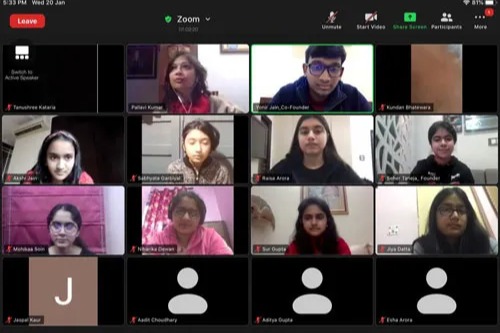
Discover Online Learning
Learn from the comfort of your home with our expert-led NATA online classes, offering flexible schedules, live interactive sessions, and access to updated study materials.

Subscribe to Study Materials
Access comprehensive study materials designed by industry experts, featuring detailed notes, practice questions, and mock tests.
FAQs
What are the NATA entrance exam eligibility requirements?
NATA Entrance Test Candidates must have passed or be taking their 10+2 exam with Physics, Chemistry, and Mathematics (PCM) as essential subjects and at least 50% aggregate marks in PCM and overall. Otherwise, those with a 10+3 diploma with mathematics as a compulsory subject and 50% aggregate marks are eligible.
How often may I take the NATA aptitude test per year?
Students can take the NATA entrance exam three times each year. Admission will be based on the best score from all attempts.
How long is the NATA admission exam score valid?
The validity of the NATA score is limited to one academic year.
Can I apply to foreign architectural colleges with NATA aptitude exam score?
NATA Aptitude scores are mostly accepted by Indian architectural institutes; however, some international universities may accept them. The prospective college's entrance requirements should be checked.
Does the NATA aptitude test have negative marking?
The NATA aptitude test has no negative marking
How do I score better in NATA?
To optimize your NATA score, you need to attain technical accuracy in your drawings. Simultaneously, review basic mathematics while improving your visual and spatial reasoning abilities for the aptitude section.
What all should I carry to the exam hall for the NATA drawing test?
You must carry your official NATA Admit Card and a valid photo identification proof (like Aadhar Card). For the drawing section, always bring your pencils (HB, 2B, etc.), eraser, and essential drawing tools, as specified in the most recent official exam notification.
How do I manage time during the NATA drawing exam?
Effective time management requires immediate allocation of minutes to each question based on its marks and complexity. Set aside the last 15 to 20 minutes for important details such as shading, rendering, and outlining, making sure every part is addressed.
Is use of scale allowed in NATA?
The use of a scale or any other geometry equipment is typically not allowed.
Can I use a ruler for drawing in the NATA entrance exam?
No, since the NATA drawing test is meant to evaluate your freehand drawing abilities, you usually cannot use a ruler.
How is the NATA rank calculated?
The NATA rank is determined by the candidate's final NATA score, which is the aggregate score obtained in the exam. To calculate your aggregate, take your NATA score, divide it by 2, add the board percentage (out of 100), then divide the total by 2.
Which books should I study for the NATA entrance exam?
Since NATA assesses both drawing and aptitude, no single book is sufficient. You should concentrate on several guides. A Complete Self-Study Guide for B.Arch Entrance Examination by PK Mishra NATA & B.Arch complete self-study material: Entrance Examination by AR. Shadan Usmani Popular Master Guide B.Arch Entrance Examination by R Gupta B.Arch (Bachelor of Architecture) Entrance Exam Guide by Surendra Kavimandan
What is the syllabus for NATA maths?
Topics from the Class 11 and 12 curricula are covered in the NATA mathematics syllabus, with an emphasis on algebra, trigonometry, coordinate geometry, and calculus.
How do I prepare for the drawing test in NATA individually?
To prepare individually, focus your practice on common NATA themes, including interior scenes, streetscapes, and complex object composition. Consistently use techniques for shading and rendering to effectively convey three-dimensional form and depth.
Academic Director
Ms. Julie James NIFT (New Delhi - 1994 batch)
She has 30+ years of experience in design education. Post-graduate from NIFT- New Delhi (1991 batch). She has held managerial roles in the fashion industry, HOD - Dept. of Fashion Design, Assumption College & as Academic Director in afdindia.

Hostels
Take the AFDSAT
get upto 90% scholarship







Kochi Center
3rd Floor, MI arcade, NH 47, Near Metro pillar 381, Edappally Toll, Ernakulam, Kochi, Cochin
Ph: 9895484652
Kannur Center
2nd Floor, Emarald Complex,
Kakkad Road, South Bazzar, Kannur,
Ph: 9895484651
Calicut Center
2nd Floor, City Tower,
Mavoor Road, Kozhikode
Ph: 9895484651